
Coop-On!: A Startup Strategy
Working families do not need another discount app. They need a partner they can trust with their grocery budget. Coop-On was built to be that partner, from scratch, in fifteen days.
The Setup:
Bringing families with limited disposable income real discounts on household items, by partnering directly with retailers.
Coop-On was conceived and developed during a 15-day startup challenge at the European Innovation Academy in Porto, Portugal, where multidisciplinary teams go from problem identification to MVP, brand strategy, and investor pitch in a compressed timeline.
The Problem:
Families need a shopping partner who feels safe. No catch, only savings.
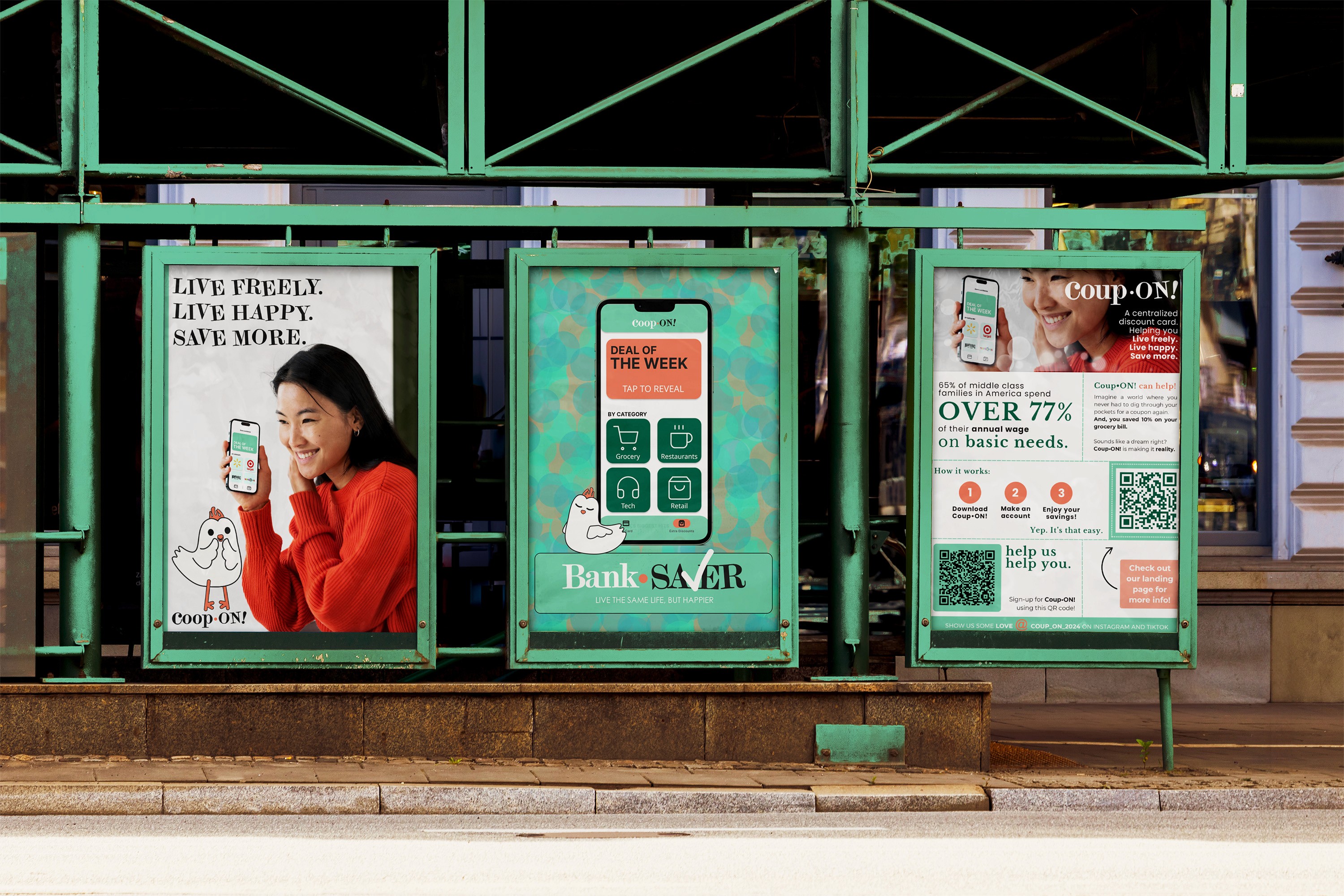
With rising living costs and limited disposable income, many working-class and low-income families are stretched thin. Three in five American families spend more than 75 percent of their income on necessities. In Florida, families can spend over $450 a year just on eggs. Working-class women make the majority of household purchases but lack structured support systems to reduce these costs.
Any discount app can offer a coupon. What none of them offer is trust. The real strategic challenge was building a brand that could simultaneously feel supportive, trustworthy, and simple for families, while feeling credible and valuable to the retail partners whose participation makes the whole model work.
The Bet:
Coop-On was positioned as a hybrid loyalty and savings platform. On the consumer side, an affordable subscription at 12 dollars a year for qualified low-income families. On the retail side, partnerships with retailers offering negotiated discounts on essentials. Every decision on both sides of that model was built around ease of use and emotional trust first.
That strategic spine got tested almost immediately. Our mentor from Nixon Peabody LLC pushed back hard after the first brand draft with one blunt question: "It's a great brand, but could you trademark it?" Families in financial stress need brands that feel steady, human, and helpful, not clever. We took that seriously and made real shifts.

The Build:
A system built for families first, brand polish second.
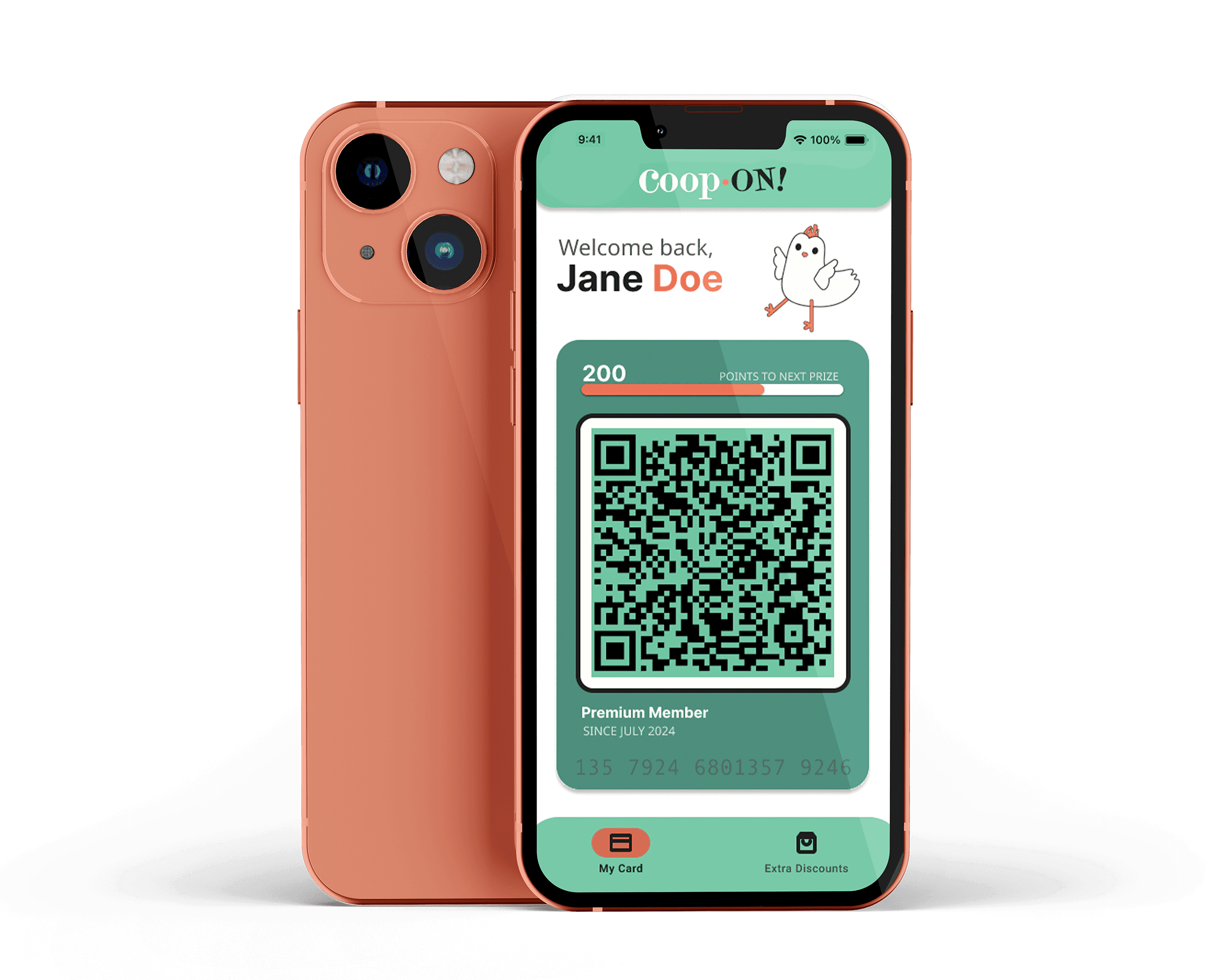
Every strategic choice connected back to trust and accessibility. Color and mood stayed light and optimistic, chosen specifically to reduce intimidation and reaffirm accessibility rather than project urgency or alarm. Layout and interface stayed simple and consistent, using structures that reassure rather than overwhelm. Messaging stayed plainspoken, with no jargon, speaking directly to real concerns instead of marketing abstractions. Partnership positioning stayed clear, articulating retail value, cost savings, and customer loyalty in language a store owner could act on immediately.
The build also included both physical and digital versions of the discount cards, specifically to include non-tech-savvy users and ensure the model actually reached the families it was meant for.
The Gallery:





Why it works:
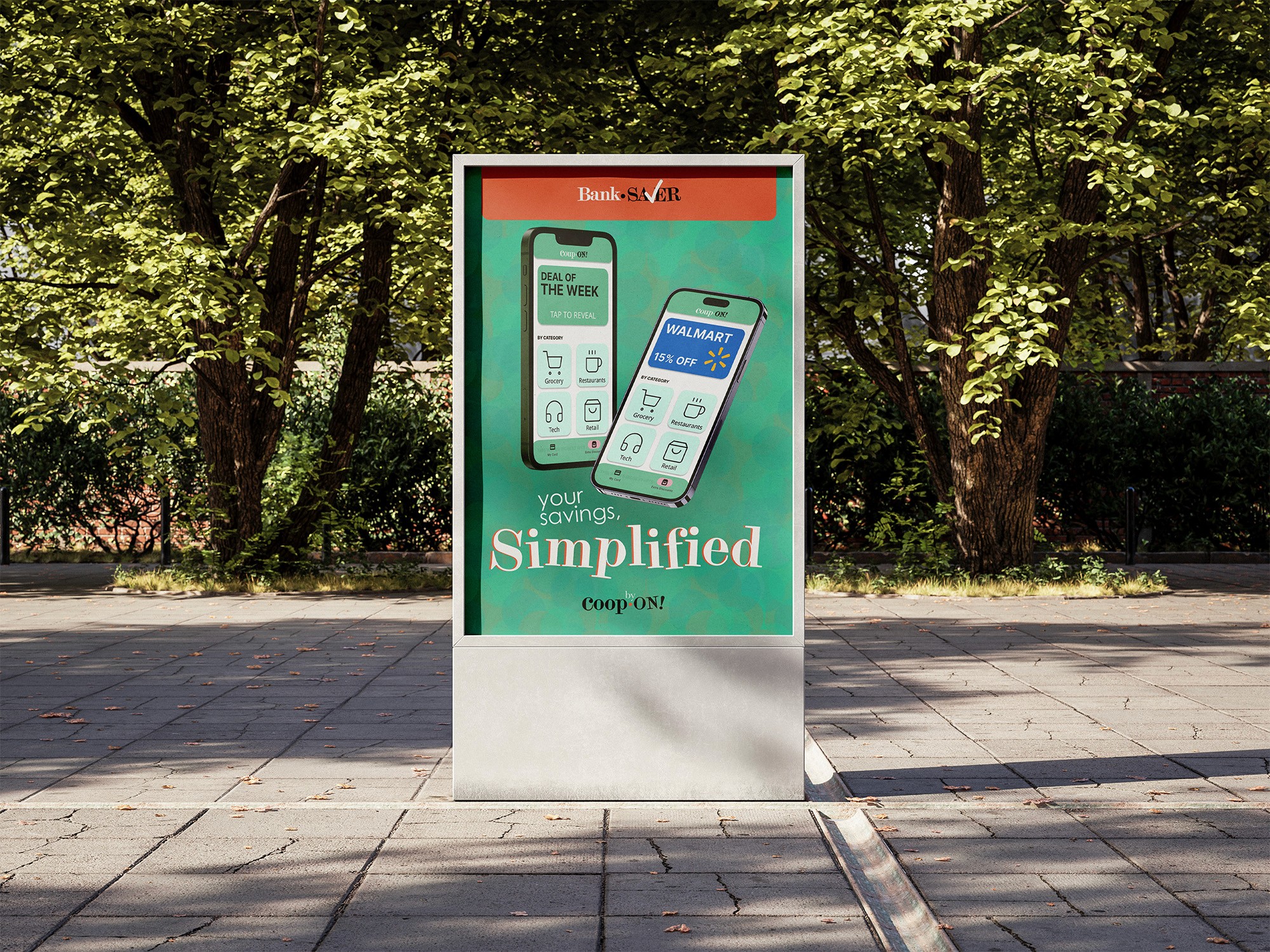
The goal was never to impress. It was to connect, and to make the solution feel approachable to people in need. That is the standard every design decision got held to, including the ones that got cut for being too clever after that first mentor conversation.
The Result:
Coop-On emerged from the sprint with a clear problem-to-solution narrative, a brand identity that could resonate with both families and retailers, a pitch that helped secure recognition and nominations, and a concept poised for real-world testing and further development.