
Behavioural Design for LS&Co.
At Levi Strauss & Co., the store where I was Product Knowledge Manager was closing a 10 percent performance gap. The fix was not new product. It was a reason for the team to care about the one they had.
The Setup:
A persistent 10% performance gap pointed to a familiar problem: the team already knew the product. They had just stopped caring about it.
The problem was not consumer demand. It was employee fatigue. My team was expected to sell an evolving product line within rigid brand guidelines, but lacked fresh, engaging tools to help them reconnect with the product story and confidently communicate value on the floor.

The Problem:
The retail team did not need more training. They needed a reason to care again.
Key challenges included decreased engagement with internal brand materials, over-reliance on memorized talking points, difficulty differentiating products beyond price and fit, inconsistent storytelling across locations, and limited emotional connection to new initiatives.
Without renewed internal interest, sales conversations became transactional, reducing both confidence and conversion.
Levi's could never need reinventing. The team needed reactivation.
The Bet:
We developed an internal-facing campaign designed to re-energize teams and sharpen product communication. The goal was for internal messaging to feel more human, more relevant, easier to recall, and more motivating to share.
Campaign assets were designed specifically for retail environments, where speed, clarity, and memorability matter most. Rather than introducing new rules, the system reinforced what already existed, but made it feel fresh, current, and worth paying attention to.
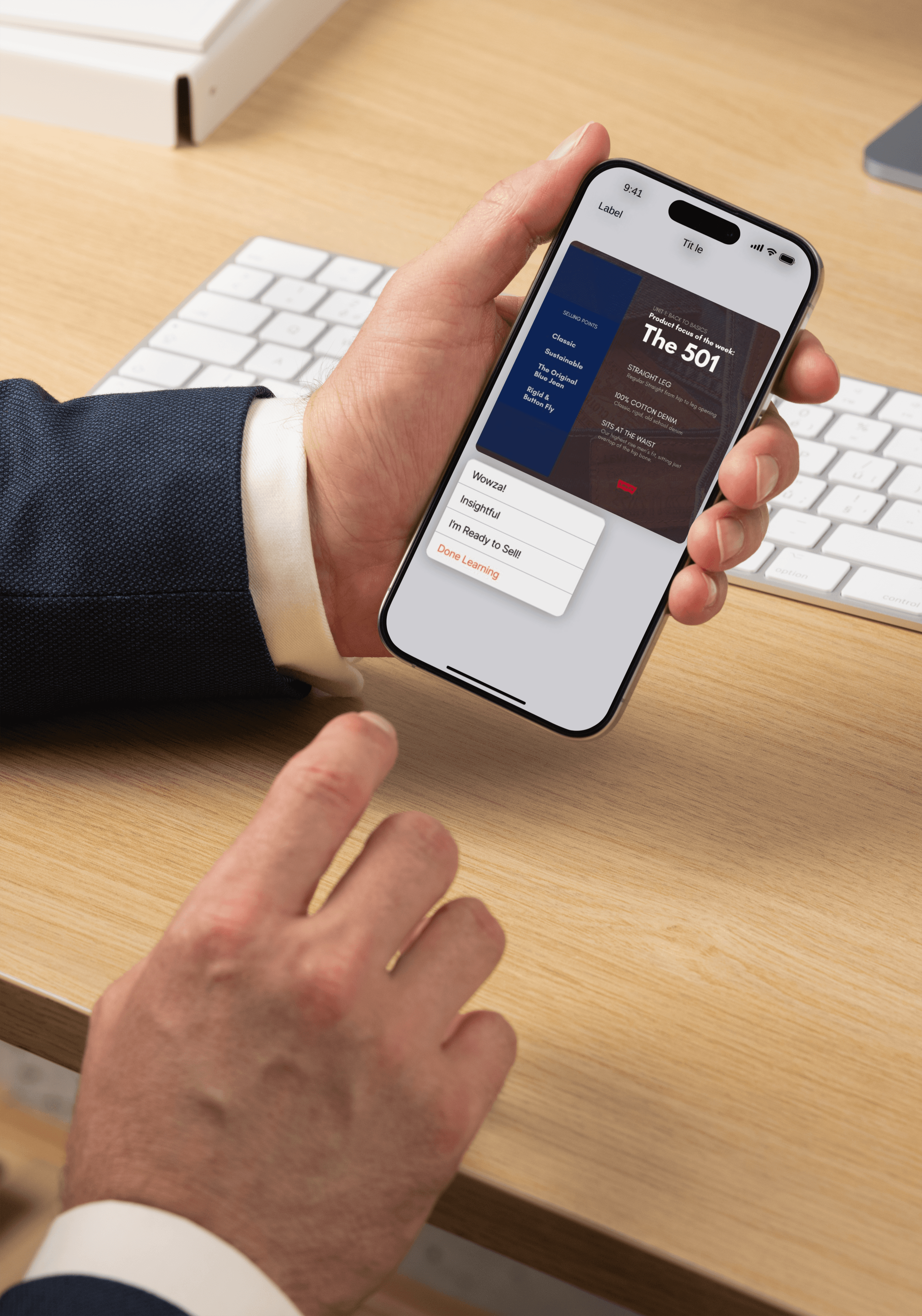
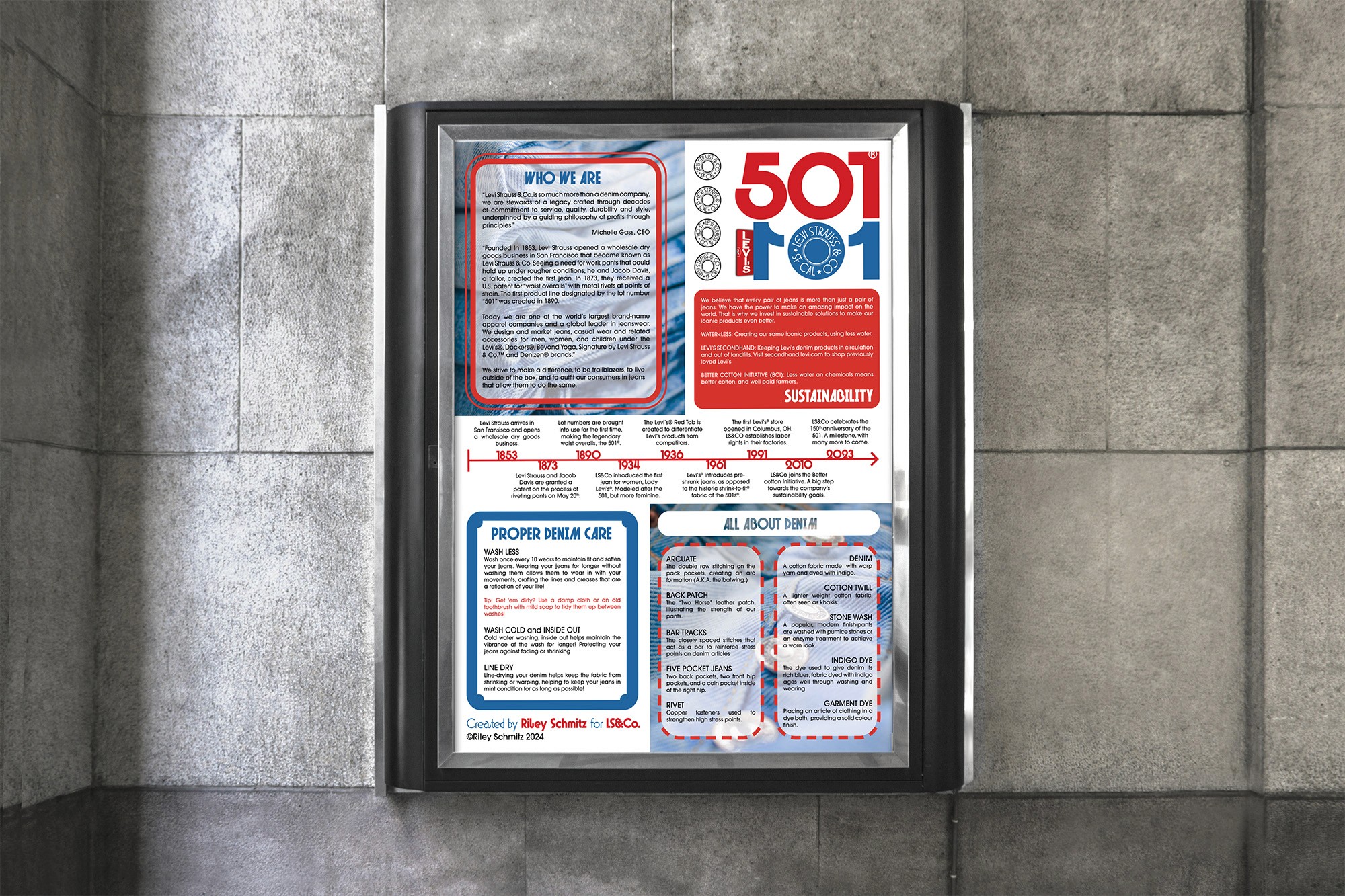
The Build:
Easy and digestible product knowledge.
My team consisted primarily of young adults aged 16 to 22, and this was crucial in crafting a solution that they could connect to. We crafted the content to be fun but on brand, solidifying the idea that LS&Co. is a great brand and instilling pride in the team for their employment there. We educated, but made it feel like entertainment, targeting employees within the age of social media using short form videos and eye-catching text posts. And we took advantage of incidental learning, strategically placing posters in the fitting rooms and in the break room, helping the team learn without knowing it.
Through these explorations, we were able to bring some amusement back into our store.
The Gallery:

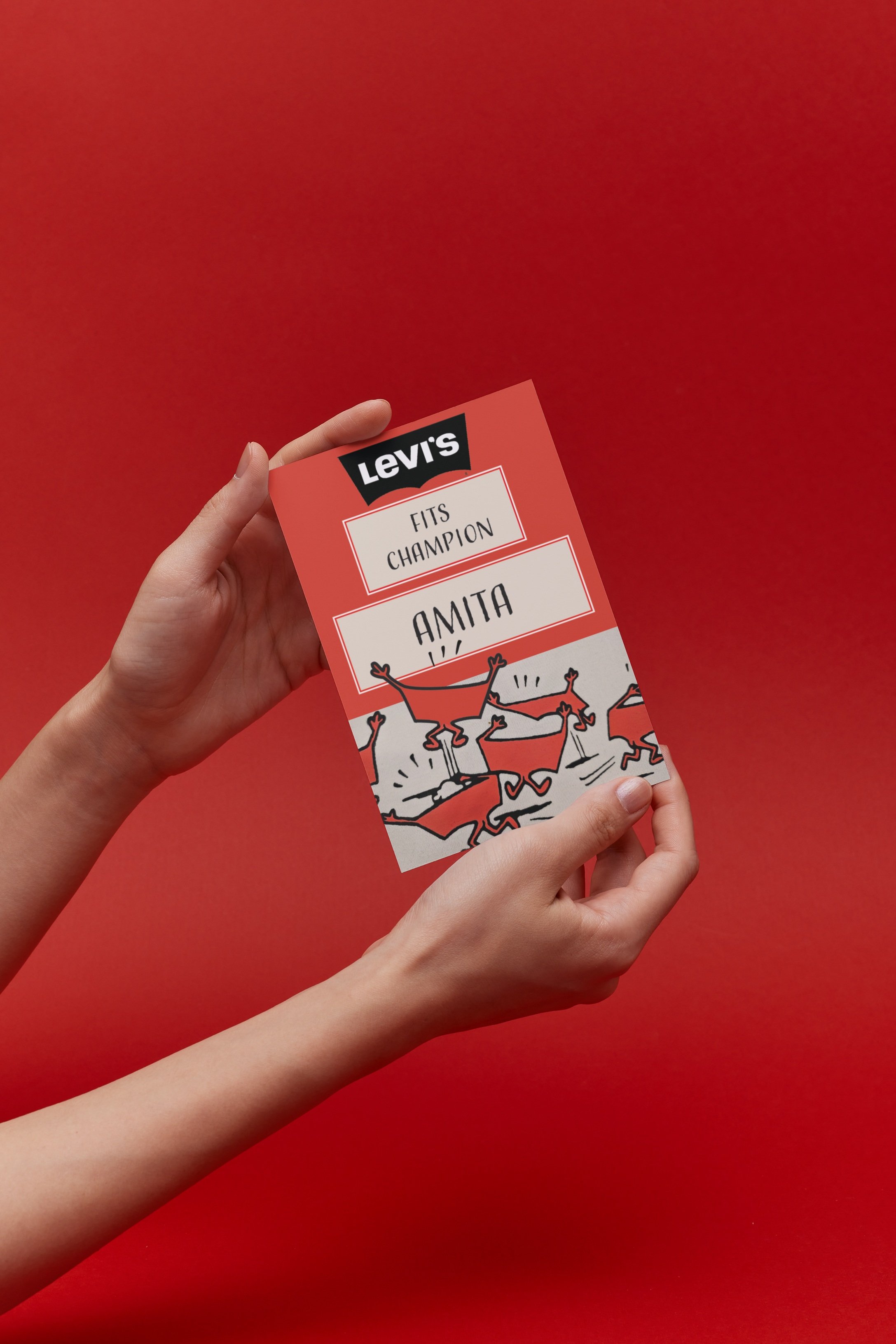


Why it works:
None of this worked because it was clever. It worked because it met the team where they already were: scrolling, half-listening, standing in a break room for ten minutes between customers. A poster in a fitting room does more good than a memo nobody reads, because it asks nothing of the team except a glance. That is the whole design principle behind behavioural design done right: change the environment, not the person's willpower.
The Result:
The campaign closed the performance gap it was built to solve, and did it without a single new product, discount, or directive from corporate. It proves a strategic principle that carries well beyond retail: sometimes the fastest way to move a number is to give the people closest to the customer a reason to feel something again.